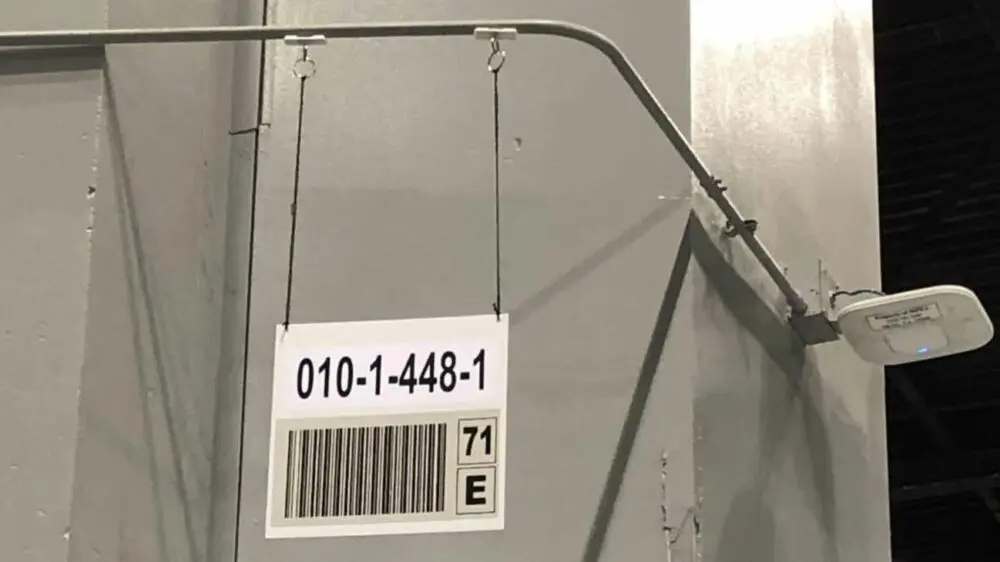
A ceiling hanging system is a set of tools and hardware used to hang signs, banners, decorations, and displays from a ceiling. Instead of relying on ladders, tape, improvised hooks, or one-time fixes, a ceiling hanging system gives your team a safer, more repeatable way to install overhead signage.
These systems are commonly used in retail stores, grocery stores, schools, churches, event venues, warehouses, and manufacturing facilities. They help teams hang displays faster, keep signage level, and reduce the need for staff to climb ladders or use lifts for routine display changes.
For businesses that update signage often, the right ceiling hanging system is more than a convenience. It becomes a safer and more efficient process.
What Does a Ceiling Hanging System Do?
A ceiling hanging system connects a sign or display to the ceiling using the right combination of ceiling attachments, like ceiling clips, ClikMagnets, hooks, and connecting cords including LoopLine, string/barb, monofilament, and steel cable. The goal is simple: keep the display secure, visible, and easy to manage.
Depending on the system, a ceiling hanging system can be used to hang:
- Promotional signs
- Aisle markers
- Directional signs
- Seasonal banners
- Event decorations
- Menu boards
- Safety signs
- Overhead wayfinding signs
- Retail graphics
Some systems are designed for light-duty signs. Others are made for larger banners or recurring display changes across multiple locations.
Ceiling Outfitters® offers solutions for drop ceilings, open-beam ceilings, finished ceilings with products designed to help teams hang suspended signs faster, safer and more consistently.
Why Businesses Use Ceiling Hanging Systems
Ceiling signs are useful because they’re easy to see without taking up floor and shelf space that matters in busy environments.
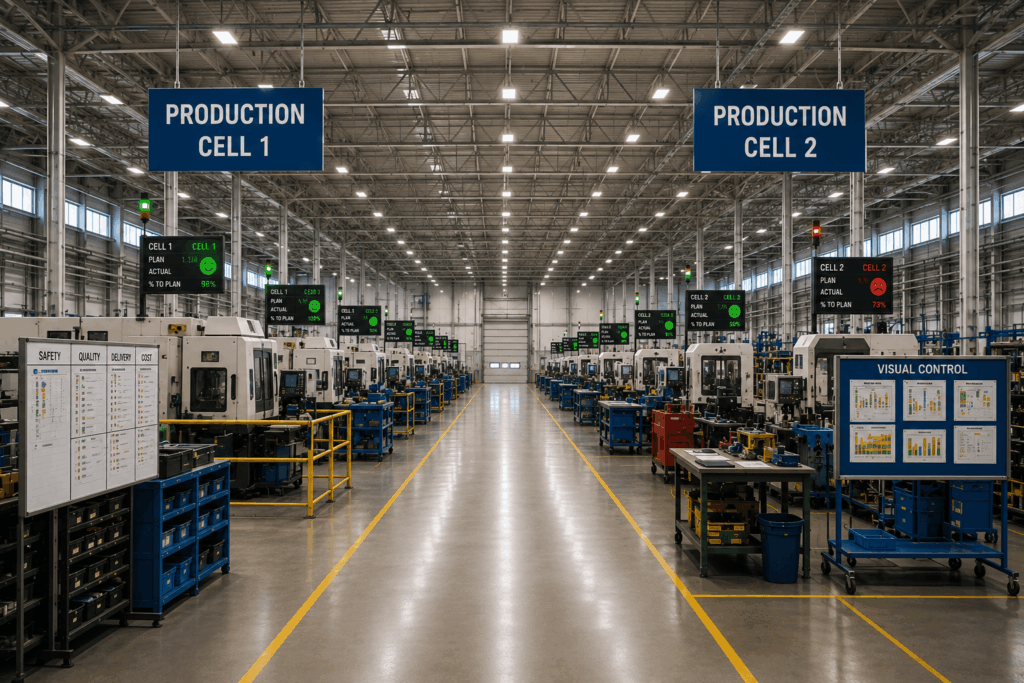
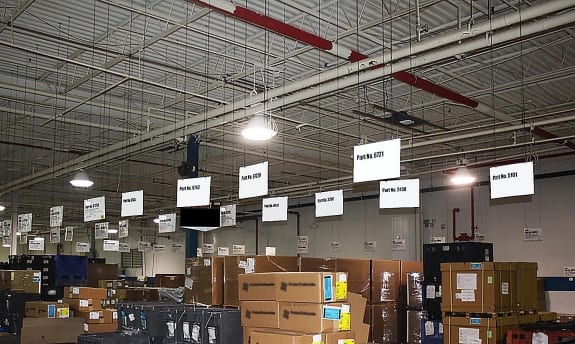
Retail stores use ceiling signs to guide shoppers and promote sales. Warehouses use them for aisle identification and safety messaging. Schools and churches use them for events, directions, and temporary displays. Manufacturing facilities use overhead signs to improve navigation and communication, plus Lean and 5S initiatives.
The challenge is not whether ceiling signage is useful. The challenge is getting those signs installed safely and efficiently. This is where a ceiling hanging system is the perfect solution.
Main Benefits of a Ceiling Hanging System
1. Safer Sign Installation
Traditional ceiling sign installation involves ladders or lifts. For teams changing displays regularly, that adds risk and slows the process.
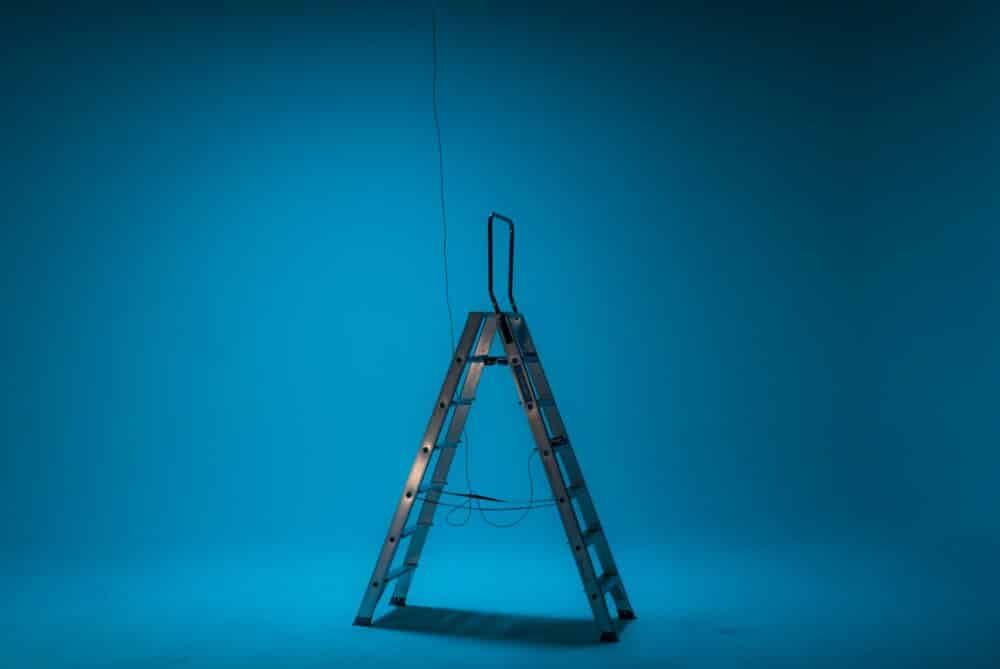
A ladder-free ceiling hanging system helps staff install or adjust signs from the floor, reducing the need to climb or work at height. Ladderless sign hanging systems are positioned around this benefit because they make it easier to hang, remove, or rotate signs without climbing.
2. Faster Display Changes
Seasonal promotions, store resets, events, and safety updates require signs to be changed quickly.
With the right system in place, staff can update displays without searching for parts, setting up ladders, or improvising a method each time. That saves time, especially in stores or facilities where signs change often.
3. More Consistent Results
When every location or department uses a different method, displays look uneven or unprofessional.
A ceiling display system creates a repeatable process. Signs hang at the right height. Banners stay level. Graphics look cleaner. Consistency matters for multi-location businesses.
4. Less Reliance on Specialized Help
Some display setups require facilities teams, lift operators, or outside installers.
A simple hanging system makes routine signage changes easier for store staff, event teams, or operations teams to handle on their own.
The Main Parts of a Ceiling Hanging System
Most ceiling hanging systems include a few basic components. The exact setup depends on the ceiling type, display weight, and how often the sign will be changed.
Ceiling Attachments
The ceiling attachment is the part that connects the system to the ceiling. Common options include ceiling and grid clips, magnetic mounts, beam clamps, hooks, and track attachments.
For suspended or drop ceilings, clips are used to attach signage to ceiling grids. Ceiling Outfitters® offers ceiling clips and hanging accessories for suspending signage and displays from standard ceiling grids.
Hanging Line, Cord, Cable, or Chain
This is what connects the ceiling attachment to the sign. Options include clear cord, LoopLine, cable, chain, wire, and monofilament.
The right choice depends on the look you want, the display’s weight, and whether the sign needs to be adjusted or reused.
Sign Connectors
These are the parts that attach the hanging line to the actual sign or banner. Examples include S- and C-hooks, clips, rings, banner rails, and grippers.
These small pieces matter. Using the wrong connector makes a display crooked, unstable, or difficult to adjust.
Installation Tools
Some ceiling hanging systems include tools that allow staff to place or adjust hardware from the floor.
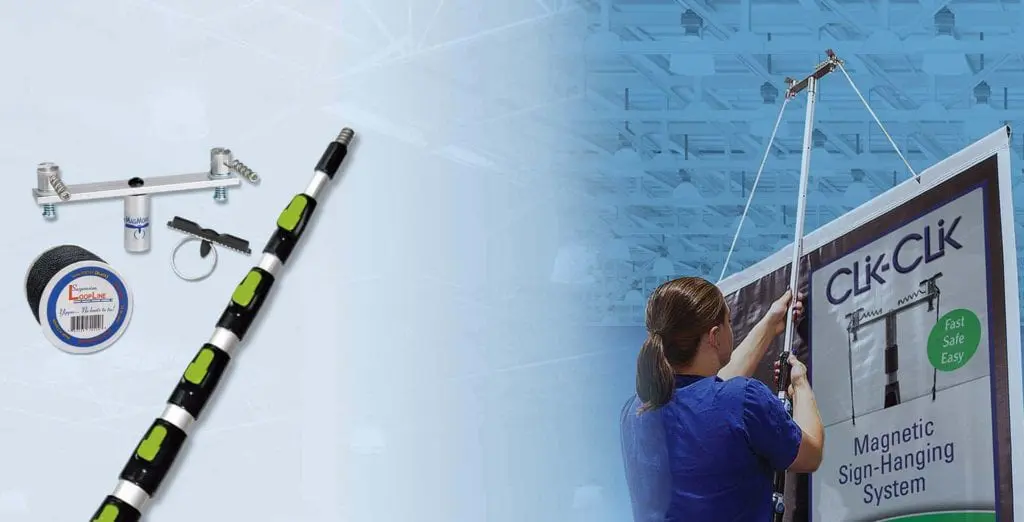
For example, magnetic systems use poles and placement tools to position magnets on the ceiling without a ladder. Ceiling Outfitters’ Clik-Clik system is designed to help users hang ceiling signs quickly and safely, with components such as poles, magnetic movers, magnets, and LoopLine.
Common Types of Ceiling Hanging Systems
With the correct accessories as shown on our How To Hang page, all ceilings can host connectors.
Magnetic Ceiling Hanging Systems
Magnetic ceiling hanging systems use magnets to attach signs or displays to compatible metal ceiling surfaces or grid systems.
These are useful for teams that want a faster, ladder-free way to hang and adjust signage. Clik-Clik’s magnetic system is designed to safely and easily hang signs, decorations, and display materials from the floor using a small set of system components.
Clik-Clik’s system is best for retail and grocery stores, seasonal displays, promotional signage, and frequent sign changes.
Ceiling Clips and Grid Clips
Ceiling clips and grid clips attach to suspended ceiling grids and create a simple connection point for hooks, cords, chains, or hanging lines.
Grid clips are designed to grip or connect to the metal grid framework, T-bar, in a drop ceiling, while ceiling clips include a broader range of attachments for different ceiling surfaces.
Ceiling clips are commonly used to hang lightweight signs, temporary promotions, aisle markers, and other retail displays from suspended ceiling grids. They provide a simple, low-profile attachment point for cords, hooks, or hanging lines, making it easy to install and update signage without permanent hardware.
Ceiling clips and grid clips are best for drop ceilings, retail signage, lightweight banners, temporary displays, and frequently updated promotional signs.
Cable Suspension Systems
Cable suspension systems use steel cable to create a clean, professional display. These systems are used in offices, showrooms, museums, schools, and commercial interiors where appearance is important.
Some cable systems are used for wall and ceiling signage, offering a more polished alternative to tape, frames, or basic hanging methods. They’re best for office signage, showrooms, schools, museums, and permanent or semi-permanent displays.
Banner Hanging Systems
Banner systems are built to keep larger graphics flat, level, and visible. They include rails, rods, hooks, cables, or magnetic holders.
Banner hanging systems are helpful for retail promotions, trade shows, gyms, churches, and event spaces. They’re best used for large banners, promotional graphics, event signage, and open spaces.
How to Choose the Right Ceiling Hanging System
The best system depends on your space and how your team works. Before choosing a ceiling hanging system, consider these factors:
Ceiling Type
Start with the ceiling.
Are you working with drop or open ceilings? Are you working with metal grids, beams, drywall, or high ceilings?
Different ceilings require different attachment methods. A magnet works well on a metal grid, while a clip is better for a suspended ceiling tile system.
Display Weight
Lightweight signs need simple clips and a connecting cord. Heavier banners require stronger hardware, rails, or multiple attachment points. Always match the system to the weight and size of the display.
Installation Height
The higher the ceiling, the more critical safety and reach become. For these spaces, a ladder-free sign-hanging system allows teams to install signage directly from the floor, eliminating the need for lifts.
Frequency of Sign Changes
If your team changes signs weekly, monthly, or seasonally, invest in a system that is easy to reuse, adjust, and store.
Staff Training
A good ceiling display system should be simple enough for the people using it. If only one person knows how to hang the signs, the process is not scalable. Look for a system that can be used consistently by different team members with minimal training.
Appearance
The hardware should support the display, not distract from it. For customer-facing areas, choose a system that keeps signage level, clean, and professional.
When a Ladder-Free System Makes Sense
A ladder-free ceiling hanging system is especially useful when signs are changed often or installed in areas with higher ceilings.
For organizations that regularly update signage, operate multiple locations, or want a more consistent installation process, a ladder-free system saves time, improves safety, and makes display changes easier for any team member to handle.
The real value isn’t avoiding a ladder one time. It’s creating a better process every time signs need to be updated.
Where Ceiling Hanging Systems Are Used
Ceiling hanging systems are used anywhere overhead signage needs to be visible, secure, and easy to manage. Common settings include
Retail Stores
Retailers use ceiling signs for departments, sales promotions, seasonal campaigns, and wayfinding.
Grocery Stores
Grocery stores use overhead signs for aisle markers, promotions, and department identification.
Manufacturing Facilities
Manufacturing teams use ceiling signage for safety communication, workflow guidance, and facility navigation.
Schools and Universities
Schools use ceiling displays for events, directions, temporary announcements, and facility signage.
Churches and Event Venues
Churches and event spaces use suspended signs and banners for services, conferences, seasonal events, and directional messaging.
Trade Shows
Event teams use hanging systems to install banners, booth signage, and promotional displays quickly.

A Better Way to Hang Signs
Many businesses treat ceiling signage as a small task. Someone grabs a ladder, finds hooks or string, and makes it work. That approach might’ve been fine at one time. But when signs need to be changed regularly, it creates problems.
Using a ladder to hang signs is often slow, creates unnecessary safety risks, and leads to inconsistent results. It also relies on someone remembering how the previous display was installed, making the process difficult to repeat across teams or locations.
A ceiling hanging system solves that by turning the task into a process. The right system helps your team:
- Work from the floor when possible
- Install signs faster
- Keep displays looking professional
- Reuse hardware
- Reduce confusion
- Improve consistency across locations
That kind of reliability matters for retailers, schools, event teams, and facilities.
Find the Right Ceiling Hanging System for Your Space
A ceiling hanging system gives your team a safer, faster, and more reliable way to hang signs, banners, and displays. The right setup depends on your ceiling type, display weight, installation height, and how often your signs need to change.
If you’re still using ladders, improvised hardware, or inconsistent methods, it may be time to switch to a system built for repeatable display installation.
Ceiling Outfitters® provides ceiling display solutions for retail stores, warehouses, schools, churches, events, and commercial facilities. Whether you need magnetic sign hanging hardware, ceiling clips, banner hanging products, or display accessories, the right system can help your team hang displays faster and safer.
Shop Ceiling Display Solutions or learn how the system works.
FAQ
What is a ceiling hanging system?
A ceiling hanging system is a group of hardware and tools used to suspend signs, banners, decorations, or displays from a ceiling.
What is the safest way to hang signs from a ceiling?
The safest option is usually a properly selected system that matches the ceiling type, display weight, and installation height. Ladder-free systems also reduce climbing for routine sign changes.
Can ceiling hanging systems be used on drop ceilings?
Yes. Many systems use clips or grid attachments designed specifically for suspended or drop ceiling grids.
What businesses use ceiling hanging systems?
Retail stores, grocery stores, warehouses, manufacturing facilities, schools, churches, event venues, and trade show teams use ceiling hanging systems.
How do I choose the right ceiling hanging system?
Start with your ceiling type, sign weight, installation height, change frequency, and safety requirements. Then choose the hardware that fits those conditions. Contact the hanging experts at Ceiling Outfitters® and visit our website at www.ceilingoutfitters.com.