Motion waste is one of the most common and most overlooked forms of waste in large facilities. Every day, employees spend valuable time searching for departments, locating materials, navigating production areas, and determining the most efficient path to their destination.
While these delays may seem insignificant in isolation, they quickly accumulate across hundreds of employees and thousands of daily movements, creating a substantial drain on productivity.
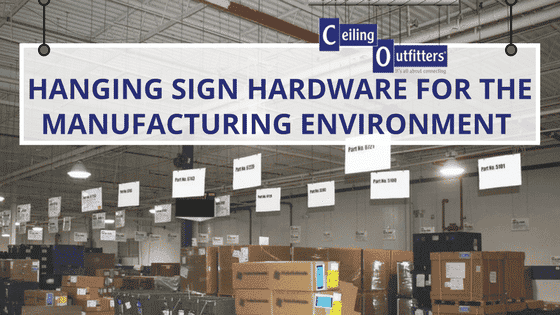
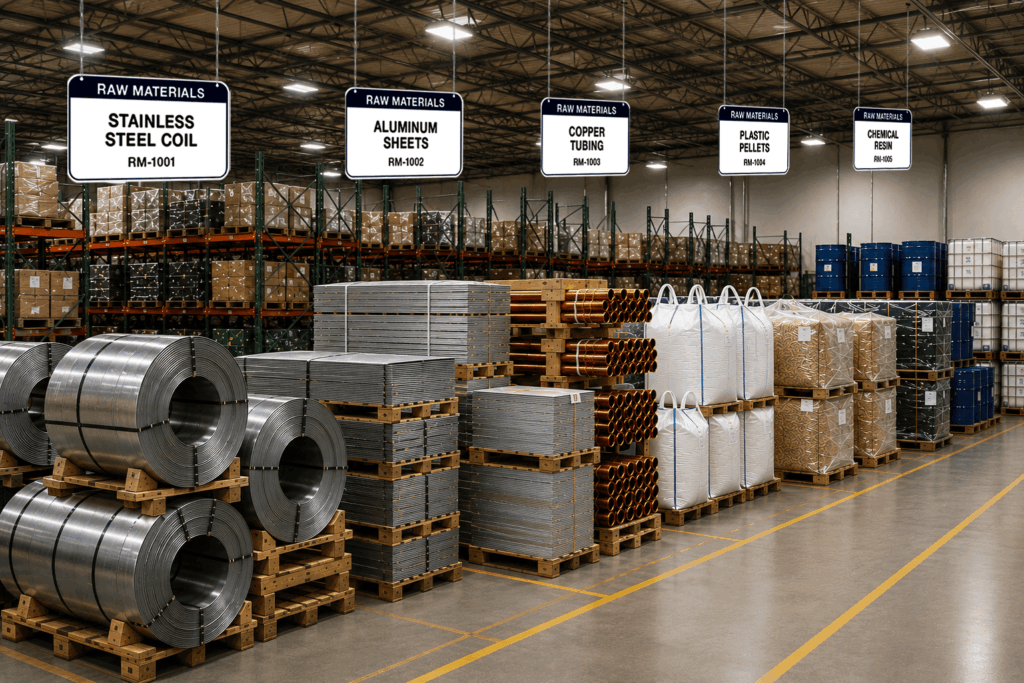
Effective wayfinding is a proven yet often underutilized solution. By using highly visible ceiling signage to identify key areas, routes, and destinations, organizations can reduce searching, improve navigation, and create a more intuitive work environment.
The result is a facility where employees move with purpose, materials flow more efficiently, and Lean principles are reinforced every day through clear visual communication.
Why Ceiling Signage is Important
In lean operations, motion waste is more than unnecessary movement──it is lost productivity that accumulates throughout every shift. Effective ceiling signage and wayfinding systems help eliminate wasted motion by guiding employees quickly and confidently to the right location, improving workflow, reducing delays, and creating a more efficient, visually organized facility.
1. Eliminates Search Time and Unnecessary Walking
In large facilities, employees often lose valuable minutes locating departments, inventory zones, staging areas, or service points. Clear overhead signage provides instant orientation from a distance, reducing the need to stop and ask for directions, or backtrack. Every avoided detour removes non-value-added motion from the workday.
Key takeaway: Better wayfinding shortens travel paths and keeps people moving directly to the task that creates value.
2. Creates Consistent Traffic Flow Across the Facility
When aisles, production cells, shipping areas, and support zones are clearly identified, employees naturally follow standard routes. This reduces wandering, cross-traffic, and repeated trips between departments. The result is smoother movement of both people and materials throughout the facility.
Key takeaway: Ceiling signage turns navigation into a repeatable process instead of a daily decision-making exercise.
3. Improves Decision Speed in High-Activity Environments
Forklift operators, maintenance technicians, pickers, and new employees often make dozens of location decisions each hour. Visible overhead signs allow those decisions to be made instantly without slowing down or relying on memory. Faster decisions reduce hesitation, reduce travel errors, and help maintain operational pace.
Key takeaway: Effective wayfinding reduces cognitive burden of navigation, allowing workers to focus on the work itself rather than figuring out where to go.
Calculating the Hidden Cost of Motion
1. Small Search Delays Become Significant Labor Losses
Brief navigation delays add up quickly across an entire labor workforce. For example, if 150 employees spend 20 seconds searching for a department or material location eight times per day, the organization loses more than 1,600 labor hours annually.
Example:
- 150 employees
- 8 searches per day
- 20 seconds spent looking for a location each time
Calculation:
150 x 8 x 20 seconds = 24,000 seconds/day
= 400 minutes/day
= 6.7 labor hours/day
=1,675 labor hours/year
At $25/hour burdened labor cost:
1,675 x $25 = $41,875 annually
Key takeaway: A simple wayfinding improvement that saves just 20 seconds per search can recover tens of thousands of dollars in labor capacity annually
2. Unnecessary Walking Distances Compound Over Time
Poor wayfinding often leads to walking, wrong turns, and backtracking. An additional 75 feet of unnecessary travel, repeated multiple times each day by dozens of employees, can result in thousands of excess miles walked annually. Clear overhead directional signage helps employees take the shortest, most efficient route.
Example:
- Average unnecessary walking distance = 75 feet
- 100 employees
- 10 occurrences daily
Calculation:
75 feet x 10 x 100 employees
= 75,000 excess feet/day
= 14.2 miles/day
= 3,550 miles/year
Key takeaway: Without effective wayfinding, employees may collectively walk the equivalent of driving from Dallas to Seattle
3. Material Retrieval Time Directly Impacts Productivity
Material handlers and production associates make dozens of retrieval trips each shift. Saving just 15 seconds per retrieval through improved wayfinding can recover hundreds of labor hours each year, while keeping production lines supplied more efficiently and reducing motion waste.
Example:
- Material handlers make 40 trips/day
- Wayfinding saves 15 seconds per trip
Calculation:
40 x 15 seconds = 10 minutes/day
250 working days = 2,500 minutes
= 42 hours/year per employee
With 10 handlers;
42 x 10 = 420 labor hours/year
Key takeaway: When retrieval routes are clearly identified overhead, productivity gains compound rapidly
4. One Minute Per Employee Creates a Powerful ROI
Lean improvements do not have to be dramatic to produce meaningful results. Saving just one minute per employee per day across a workforce of 200 employees can recover more than 800 labor hours annually. Ceiling signage is one of the few improvements that deliver these time savings continuously without requiring additional employee effort.
Example:
- Average unnecessary walking distance = 75 feet
- 100 employees
- 10 occurrences daily
Calculation:
75 feet x 10 x 100 employees
=75,000 excess feet/day
=14.2 miles/day
=3,550 miles/year
Key takeaway: If ceiling signage saves only one minute per employee each day, the annual impact can be surprisingly significant
5. Before and After Time Studies Validate Results
Treat ceiling signage like any other Lean improvement by measuring its impact. Record the average time required to locate departments, inventory, or workstations before installation, then compare the results afterward. Quantifying reductions in search time provides objective evidence of improved wayfinding and helps demonstrate the return on investment.
Measure:
- Time required to locate a department
- Time required to find inventory
- Time required to locate safety equipment
- Time required to reach shipping/receiving
Example:
- Before signage – Average search time = 45 seconds
- After signage – Average search time = 15 seconds
- Improvement – 67% reduction in search time
Key takeaway: The most effective wayfinding projects are measured like any other continuous improvement initiative──with baseline data and post-implementations results.
Strong ROI Logic
Recover Productive Labor Time: The greatest return comes from reclaiming productive labor time. Rather than asking, “What does the signage cost?” ask: “How much productive time does it recover every day?”
Small Time Savings Multiply into Big Results: One employee saving twenty seconds is not impressive. Two hundred employees saving twenty seconds every day is. This is the essence of Lean thinking: small, repeatable improvements compounded across an entire operation produce meaningful financial return.
Ceiling Signage Delivers Continuous Value: Unlike process improvements that require months of training, ceiling signage begins delivering value immediately──less searching, less hesitation, faster navigation, better traffic flow, and few interruptions. Ceiling signage works every shift, every day.
Reduce Operational Interruptions: Supervisors, team leaders, and experienced workers often spend time answering: “Where is Receiving?” “Where are the spare parts?” “Which aisle is Assembly?” Each interruption costs productivity for all involved. Effective ceiling signage reduces these interruptions. ROI is not only employee time──it also recovers supervisory time.
Simple ROI formula that works: A simple formula can help estimate the value of ceiling signage: Annual Labor Savings=Employees x Searches per Day x Seconds Saved per Search x Workdays per Year x Hourly Labor Rate.
- 120 employees
- 8 searches/day
- 15 seconds saved/search
- 250 workdays
- $32/hour labor rate
- Annual savings: 120 x 8 x 15 x 250 ÷ 3,600 x $32 = $32,000 in recovered labor capacity annually.
Where Better Wayfinding Delivers the Greatest Impact
1. Material Handler Retrieving Components
Material handlers make dozens of trips each shift to replenish production lines and retrieve inventory.
Without Effective Ceiling Signage – Stops to verify aisle locations, travels down the wrong aisle, backtracks after missing the correct storage area and interrupts another employee for directions.
With Effective Wayfinding – Overhead aisle markers are visible from across the warehouse, color-coded zone identifiers confirm the destination, and the shortest route is immediately apparent.
Operational Benefit – Faster replenishment, less unnecessary walking, and improved production uptime.
2. New Employee Learning the Facility
New employees are especially vulnerable to motion waste because they are unfamiliar with the facility layout.
Without Ceiling Signage – Frequently asks for directions, misses department entrances, takes indirect routes, and relies heavily on supervisors.
With Ceiling Signage – Department names are clearly visible from long distances, directional signs guide movement through the facility, and employees gain confidence quickly.
Operational Benefit – Faster onboarding, reduced supervisor interruptions, and improved employee confidence.
3. Forklift Operator Navigating a Busy Warehouse
Forklift operators make hundreds of navigation decisions between receiving, storage and shipping each shift.
Without Ceiling Signage – Slows to verify locations, makes unnecessary turns, and experiences congestion at intersections.
With Ceiling Signage – Overhead signs identify warehouse zones well in advance, traffic routes are easier to follow and decisions are made earlier, reducing hesitation.
Operational Benefit – Smoother material movement, improved productivity, and increased safety.
Motion Waste Reduction Checklist: Is Your Wayfinding Working?
Use this quick assessment to identify opportunities to reduce unnecessary motion and improve facility navigation.
| Question | Yes/No |
| Are department and work areas clearly identified with overhead ceiling signs? | |
| Can first-time visitors navigate your facility without asking for directions? | |
| Are aisle identifiers visible from at least 75-100 feet away? | |
| Do employees spend time searching for tools, inventory, or workstations? | |
| Are shipping, receiving, staging and storage areas clearly marked? | |
| Are emergency exits, PPE stations, and safety equipment easy to locate? | |
| Are ceiling signs positioned above equipment and shelving, so they remain visible? |
|
| Are outdated or conflicting signs removed promptly? | |
| Is signage standardized in color, terminology, and typography throughout the facility? | |
| Is your wayfinding system reviewed whenever layouts or workflows change? |
If you scored 9 or 10, then your facility likely has an effective visual navigation system. A score of 6-8 indicates a good foundation, but target improvements in wayfinding and ceiling signage. A score of 5 or below indicates your facility may be experiencing significant motion waste caused by inadequate visual guidance.
A well-designed wayfinding system should allow employees and visitors to answer three questions almost immediately
- Where am I?
- Where do I need to go?
- What is the quickest way to get there?
Think Lean! Think Visual! Think of Ceiling Outfitters!
The true value of ceiling signage becomes apparent during everyday operations. A material handler locating inventory, a forklift operator navigating warehouse aisles, a new employee learning the facility, or a maintenance technician responding to a breakdown all face the same question: What do I do next? When the answer is immediate, motion waste disappears.
Well-designed wayfinding creates a facility that communicates visually and continuously. Employees spend less time searching and more time producing, picking, assembling, repairing, and shipping. The result is a workplace where movement is purposeful, workflows are smoother, and Lean principles are reinforced with every step.
In the end, effective ceiling signage is not about hanging signs──it is about designing a facility that helps people succeed the moment they look up.
About Ceiling Outfitters
Since 2007, Ceiling Outfitters has supported more than 2,000 organizations across 22,00 locations in industries ranging from manufacturing and retail to education, electrical, and construction. Our focus is simple: help you turn underutilized ceiling space into a powerful visual communication tool──safely, easily, and cost-effectively.