
By Bruce Hrvatin, Category Manager Manufacturing
Walk into almost any manufacturing facility and you will see a common challenge; information fighting to be seen. Equipment, pallets, shelving, and machinery crowd the floor and walls, making it easy for important signs to disappear into the background. With forklifts in motion, production lines running, and teams focused on efficiency, clear communication is not helpful──it is essential.
This is where ceiling signage becomes a powerful tool. Suspended above the activity, these signs cut through visual clutter and deliver critical information exactly where it is needed.
From directing workflow to improving safety and navigation, ceiling signage helps keep operations organized and efficient. When placed strategically, ceiling signs guide employees, visitors, and operators through complex spaces while reinforcing safety protocols and production zones. Effective overhead signage can make a measurable difference.
Key Benefits of Ceiling Signage in a Lean Environment
Enhanced Visibility: Positioned above eye level, ceiling signs ensure that critical information──such as production goals, safety protocols, and process steps are visible from virtually anywhere on the factory floor, assuring key information is not blocked by machinery, materials, walls, or people.
Visual Management & Communication: Acts as a “visual factory to display key performance indicators (KPIs), goals, and standards, keeping teams focused on targets and immediate, actionable feedback.
Waste Reduction (Lean Efficiency): Effective signage eliminates “non-value-added-work” such as workers stopping to ask for directions or instructions, time workers waste searching for materials, or navigating poorly marked zones.
Improved Safety & Hazard Awareness: Overhead signage is vital for hazard awareness, clearly identifying exits, evacuation routes, and high-risk areas to reduce workplace accidents.
Space Optimization: Ceiling signage often utilizes overlooked space, keeping walls and floors clear for production which is critical in maintaining 5S standards.
Process Streamlining: Signs define and organize functional zones like shipping, receiving, material flow routes, staging zones, and aspecific workstations to streamline material flow.
Employee Morale: Fresh, creative signage can be used to share success stories, safety records, and company goals, encouraging employee engagement and accountability.
Optimizing Ceiling Signage: Best Practices to Improve Visibility and Performance
Align Signage with Lean Objectives and 5S Principles: Your ceiling signage should directly support core lean goals (reducing waste, improving flow, safety features, and enhancing visual management).
“Go Big”: Use large, legible fonts for maximum visibility from a distance. (e.g., one inch of letter height per 10 feet of viewing distance). Use consistent, bright colors for diverse types of information (e.g., safety, zone identification, performance) to enable instant recognition.
Standardize Design and Placement Across the Facility: Consistency is critical. Establish clear standards for color coding, naming conventions, font size, and mounting heights.
Install for Flexibility: Use mounting methods that allow for quick relocation or updates without specialized labor or downtime. Modern magnetic hanging systems allow teams to change or move signs from the floor in minutes without ladders, supporting the lean principle of continuous adaptation.
Simplicity: Keep messaging short and use universally recognized symbols to transcend language barriers and provide instant understanding.
Integrate Signage into Daily Management and Audits: Ceiling signage shouldn’t be “set it and forget it.” Incorporate signage into routine audits and Gemba walks.
Connecting Ceiling Signage to 5S: A Practical Implementation Guide
In lean manufacturing, ceiling signage is a critical component of a “visual factory,” mapping directly to each of the 5S pillars to reduce waste and improve operational flow.
Sort
- Role: Identifies what stays and what goes.
- Ceiling Signage Application: Use large overhead “Red Tag” zone signs to clearly define temporary holding areas for items being evaluated for removal, preventing them from cluttering active production zones.
Set in Order
- Role: Creates a “home” for everything to minimize searching.
- Ceiling Signage Application: Overhead signs mark high-level zones──such as Shipping, Receiving or specific assembly lines and production cells──allowing workers to navigate the floor without consulting maps or asking for directions.
Shine
- Role: Ensures cleanliness and inspection readiness.
- Ceiling Signage Application: Hang high visibility cleaning station markers or “Area Owners” signs above specific stations. These overhead cues remind teams of their responsibility to keep that specific zone clean and orderly.
Standardize
- Role: Establishes consistent visual rules across the facility.
- Ceiling Signage Application: Color-coded overhead banners (e.g., Blue for Production, Yellow for Caution) confirms that everyone, regardless of their shift or department, understands the status and function of a zone.
Sustain
- Role: Builds the discipline to maintain the other four points.
- Ceiling Signage Application: Displaying KPI (Key Performance Indicator) boards or 5S audit scores on large overhead displays provides constant visual reinforcement of goals and performances, making lean culture impossible to ignore.
Strategic Advantage Over Floor Markings
- While floor tape is essential for precise placement, ceiling signage provides long range visibility. Workers can see overhead signs from across the facility even when floor markings are blocked by pallets, forklifts, or heavy machinery.
Quantified Financial Impact of Visual Navigation
While specific savings vary by facility size, documented cases and system-wide implementations show considerable time and motion reductions:
- 40% Reduction in Search Time: In navigation-focused studies, optimized overhead signage has been shown to help individuals find the correct aisle or workstation 40% faster than in environments with poor or non-existent visual cues.
- 70% Faster Installation & Maintenance: Using specialized “ladder-less” magnetic hanging systems, facilities can move or update ceiling signs 70% faster than traditional methods. This directly reduces the “motion waste” of maintenance teams who would otherwise spend hours positioning lifts or ladders.
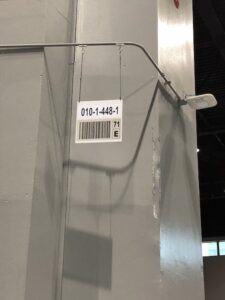
- Long-Range Efficiency: Ceiling signs enable long-range barcode scanning, allowing forklift operators to scan aisle markers from a distance. Even if this saves only one second per scan, in a high-volume warehouse with thousands of daily picks, this eliminates hours of unnecessary travel and “stop-and-start” motion.
Financial Impact of Motion Waste
To put these movements into a financial context:
- The Cost of “Seconds”: If a worker spends 5 minutes per hour searching for tools, materials, or locations due to poor signage, which equate to over 160 hours of wasted motion per year per employee.
- Bottom Line Savings: In a standard setup of 10,000 repetitive tasks, a small reduction in motion (e.g., 8.6 seconds saved per task) can translate to nearly 24 hours of reclaimed labor time, potentially saving a company over $17,000 annually for just one project area.
Visual Workplace Self-Audit: A Checklist for Continuous Improvement
This sample audit checklist is designed to integrate ceiling signage into your existing 5S or visual management routines. Available as a downloadable document from our website’s More Info page.

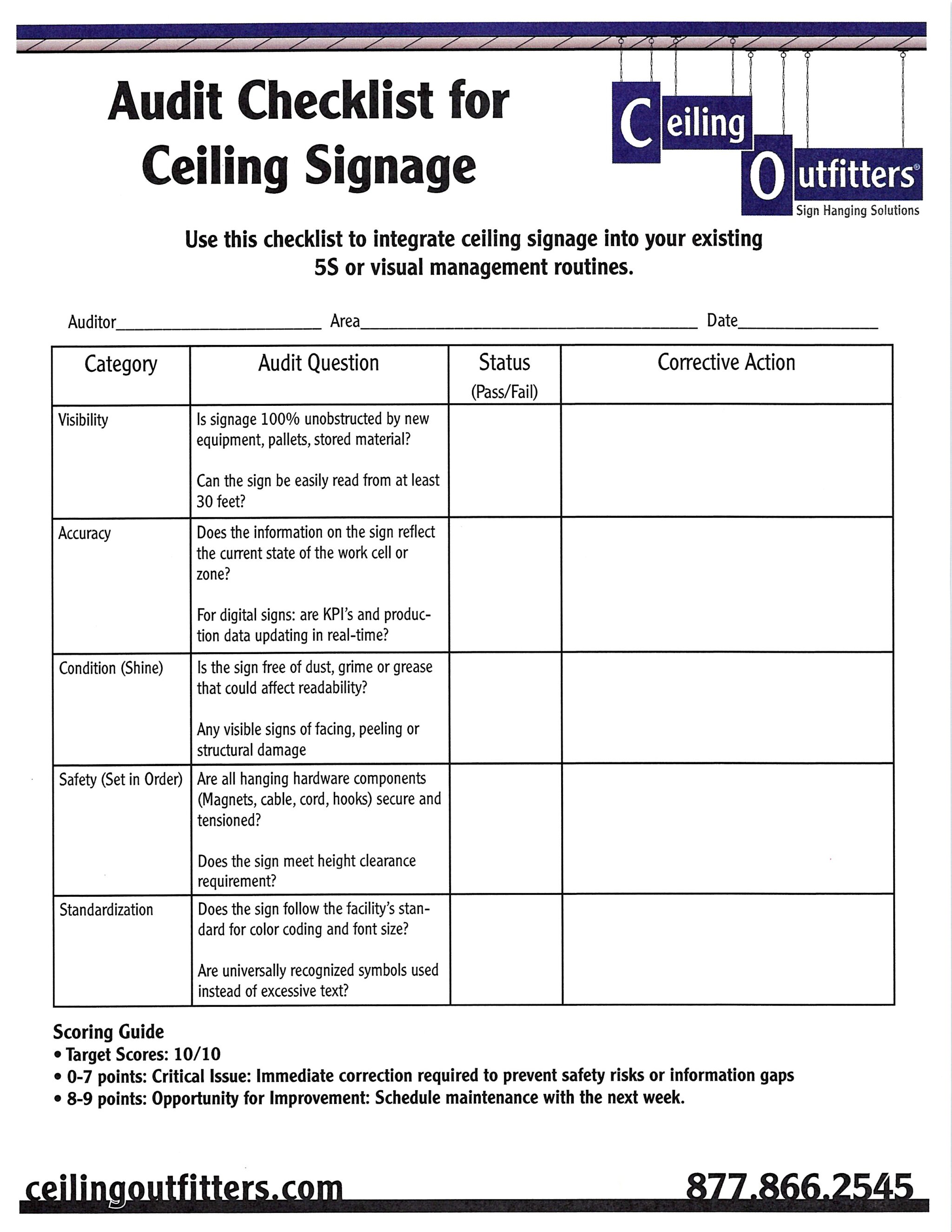
Ceiling Signage Sustainment Guide for Long-Term Lean Manufacturing Success
Establish Standardized Audits
Regularly verify that your signage remains accurate, visible, and functional.
- Visual Inventory: Conduct a “walk-around” audit at least twice a year to list every existing sign and identify those needing repair or replaced.
- Condition Checks: Use a checklist to inspect for fading, peeling, or dirt buildup that obscures messages.
- Structural Integrity: For physical signs, ensure all hanging hardware, like magnetic sign holders and steel cable, remains secure.
Fight “Signage Fatigue”
When employees see the same stimulus daily, they eventually stop noticing it, a phenomenon known as habituation.
- Rotate and Refresh: Periodically change the color, shape, or specific wording of safety and purposeful signs to re-engage workers’ attention.
- Eliminate Redundancy: Remove signs that no longer serve a purpose. If a machine or process changes, immediately update the overhead visual to prevent conflicting information.
- Prioritize the “Critical Few”: Avoid visual noise by only displaying signs that directly impact safety, flow, or quality.
Embed Signage in Standard Work
Make the maintenance of visuals a part of the daily routine, not an afterthought.
- Operator Ownership: Involve the people who work in the area in the design and cleaning of their signs. Operators are more likely to respect and maintain tools they help create.
- Training & Education: Include signage interpretation in all onboarding and refresher training to ensure everyone understands the meaning behind specific colors or symbols.
- 5S Integration: Add “clean/inspect ceiling signage” to your Shine (the third “S”) checklists to ensure they are addressed during regular facility cleaning.
Leverage Flexible Infrastructure
Use hardware that supports rapid, safe changes without requiring heavy machinery.
- Magnetic Sign Systems: Utilizing telescoping poles and magnetic connectors allows a single worker to change signs from the floor in minutes, removing the cost and safety barriers to keep visual current.
- Digital Agility: For digital displays, use central management software to update KPIs or alerts instantly, ensuring the floor always has the most relevant data.
Ceiling Outfitters Best Practices for Mounting Ceiling Signage in Manufacturing Facilities
Hanging ceiling signage in a lean manufacturing facility is not about getting signs up──it is about supporting visibility, flow, and safety without introducing clutter of inefficiency. The best methods are simple, repeatable, and adaptable as layouts evolve.
Here are some of the most effective, lean-friendly ways to hang ceiling signage:
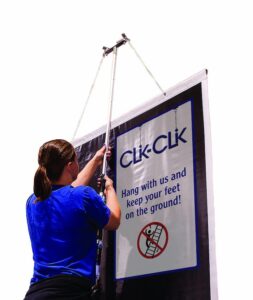
The Clik-Clik System
Perfect for facilities with exposed steel beams or grid ceilings.
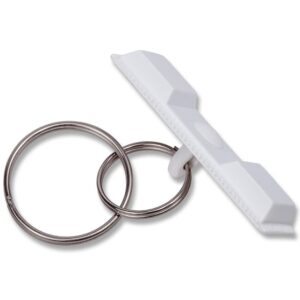
- Strong neodymium magnets attach directly to metal surfaces.
- No drilling or permanent hardware required.
- Quick installation and removal.
- Hang signs up to 27 feet high from the safety of the floor.
- No ladders or lifts required.
- The Clik-Clik Magnetic Sign Hanging System
- ClikMagnets
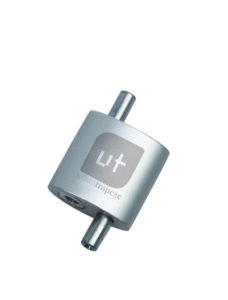
The UrbanTrapeze System
For more permanent or heavier-duty installations.
- Compact, lightweight, and reusable
- UT 1.5 for 1/16th cable has a 48-pound safe working load.
- UT 3.0 for 1/8th inch cable has a 170-pound safe working load.
- Attach UrbanTrapeze to top of sign.
- Easily adjust height of sign with the push of a button.
- Ideal for heavier or large signs.
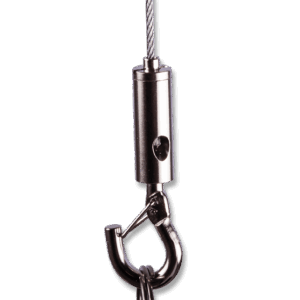
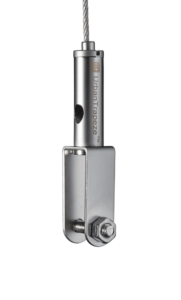
- UrbanTrapeze Adjustable Cable Grippers
The FlatHat System
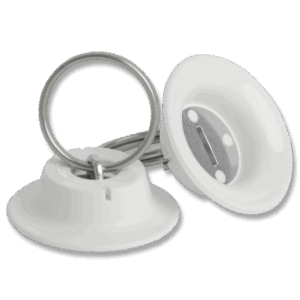
The solution for hanging signs from tall ceilings over 27 feet tall.
- Creates a dedicated connection point for safely hanging signs without a ladder.
- Requires one-time installation of FlatHat Receivers.
- Hang signs from ceilings over 27 feet tall.
- Secure steel cable to ceiling beams with a crimp.
- FlatHat Signing System for Tall Ceilings
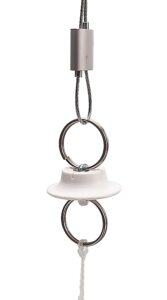
Sign Hanging Kits (Professional Look)
A cleaner, more polished option for organized environments.
- Perfect for instructional classroom and hallway settings.
- Provides precise height alignment.
- Often used for double-sided signs.
- Clean low-profile designs.
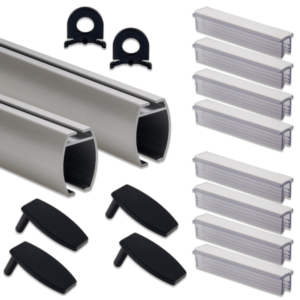
- E-Z Elliptical Aluminum Banner Hanging Kit.
- SmartConnect Magnet Hanging Kit with UrbanTrapeze.
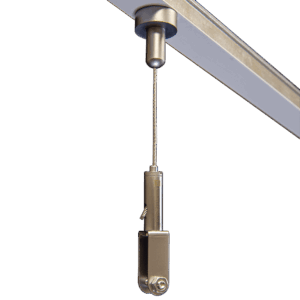
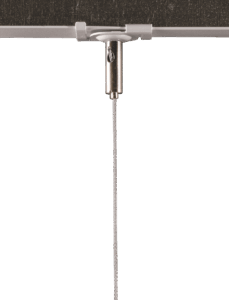
- UrbanTrapeze Drop-Ceiling Hanging Cable Sign Holder Kit.
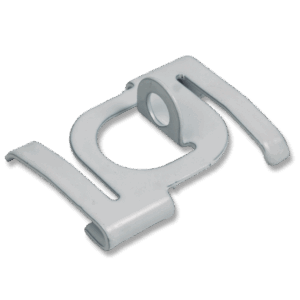
Grid Ceiling Clips (Drop Ceiling System)
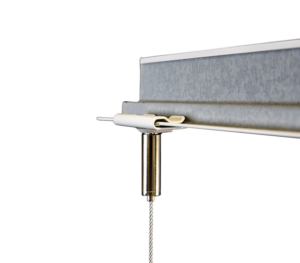
If your facility has a drop/grid ceiling, clips are one of the fastest and cleanest solutions.
- Snap directly onto the ceiling grid.
- Provide consistent placement and alignment.
- Ideal for lightweight signs like aisle markers or process labels.
- Easy to reposition during continuous improvement changes.
- Ceiling Sign Hanging Accessories.
Think Lean! Think Visual! Think Ceiling Outfitters!
Great manufacturing environments do not happen by accident──they are designed with intention. Ceiling Signage is one of the simplest yet most impactful ways to shape that environment, turning empty overhead space into a constant source of guidance, clarity, and confidence. When employees can instantly understand where to go, what to do, and how to stay safe, they move with a purpose──and that purpose drives performance.
At its core, ceiling signage is about creating a workplace that works for people. It removes friction, reduces frustration, and empowers teams to focus on what truly matters: doing great work safely and efficiently. When you elevate your entire operation, create a facility that not only performs better, but feels better to work in every day.
About Ceiling Outfitters
Since 2007, Ceiling Outfitters has supported more than 2,000 organizations across 22,000 locations in industries ranging from manufacturing and retail to education, electrical, and construction. Our focus is simple: help you turn underutilized ceiling space into a powerful visual communication tool—safely, easily, and cost-effectively.