Retail stores rarely install overhead signage just once. Promotional campaigns, seasonal displays, department resets, and product launches all require signs to be replaced or repositioned throughout the year. The faster those changes happen, the sooner employees can return to serving customers.
Changing overhead signage quickly in retail stores starts with more than moving faster. It requires a repeatable process that reduces unnecessary labor, keeps employees safer, and makes future updates easier. When your team uses consistent methods and reusable hanging systems, every sign change becomes more efficient from start to finish.
Why Traditional Sign Changeouts Slow Retail Operations
Retail teams work against tight deadlines. A seasonal promotion, weekend sale, or corporate rollout may require dozens of overhead signs to change before customers walk through the door.
Traditional installation methods create delays because every changeout starts from scratch. Employees gather ladders, locate hardware, reposition equipment, and adjust signs until they hang correctly. Even a straightforward update can consume more time than expected.
Those delays multiply across larger stores or multiple locations. A process that adds only a few extra minutes per sign can consume several labor hours during a complete store reset.
The challenge isn’t simply hanging signs. It’s repeating the same task efficiently every time new messaging replaces the old.
The Hidden Costs of Slow Sign Changes
Labor is one of the biggest operational expenses for retailers. Every minute spent setting up equipment or adjusting overhead signs is time employees cannot spend stocking shelves, helping customers, or preparing the sales floor.
Slow changeouts can also affect store readiness. If promotional signs aren’t installed before opening, customers may miss new offers or receive inconsistent messaging throughout the store.
Another challenge is inconsistency. Different employees may hang signs at different heights or use different attachment methods. That creates a less polished appearance and makes future updates more difficult because there isn’t a standard process to follow.
Retailers that update signage throughout the year benefit from treating overhead displays as part of an ongoing operational system instead of a one-time project.
What Makes Retail Signage Easier to Update?
Not every ceiling display system supports recurring changeouts. If replacing one sign means rebuilding the entire installation, the process will continue to consume unnecessary time.
An efficient system should make future updates just as simple as the first installation.
Look for solutions that provide:
- Floor-level installation whenever practical
- Reusable components instead of disposable hardware
- Quick attachment and removal
- Easy height adjustments
- Consistent sign positioning across departments
- Simple training for new employees
These features create a repeatable workflow instead of requiring employees to solve the same problem during every promotional change.
Plan for the Next Sign Change, Not Just Today’s
Retail signage is temporary by design. New promotions replace old ones, departments move, and seasonal campaigns come and go. Planning for the next update is just as important as completing the current one.
That starts by standardizing how signs are installed throughout the store.
Using the same hanging method across departments reduces confusion during future resets. Employees don’t have to figure out different hardware or installation techniques each time they replace a display.
Reusable hanging components also simplify inventory. Instead of replacing hardware with every campaign, your team can reuse the same system while updating only the sign itself.
The goal is consistency. When every overhead display follows the same process, future changeouts become faster and easier to manage.
Reduce Setup Time Before the Work Begins
One of the easiest ways to improve efficiency is to prepare materials before anyone steps onto the sales floor.
Group signs by department or installation sequence before the changeout begins. Verify that each sign has the correct hanging hardware attached before employees start replacing displays.
This simple preparation reduces unnecessary trips between storage areas and the sales floor. It also minimizes interruptions once the changeout is underway.
If multiple employees are working together, assign specific sections instead of having everyone move throughout the store. A structured approach keeps work organized and prevents missed locations.
Use a Hanging System Designed for Recurring Updates
Retail environments demand more than a one-time installation. They require systems that support repeated sign changes without creating additional work.
Ceiling display systems designed for recurring updates allow employees to install, remove, or reposition signs using the same consistent process. Instead of improvising with different hardware, teams follow a standardized method every time.
This approach also improves training. New employees can learn one process instead of several different techniques for different areas of the store.
As stores grow or promotional schedules become more demanding, a standardized system becomes even more valuable because every location follows the same workflow.
Minimize Ladder Use Whenever Possible
Retrieving ladders, moving them into position, and relocating them throughout the store adds time to every changeout. It can also interrupt normal store operations, particularly during business hours.
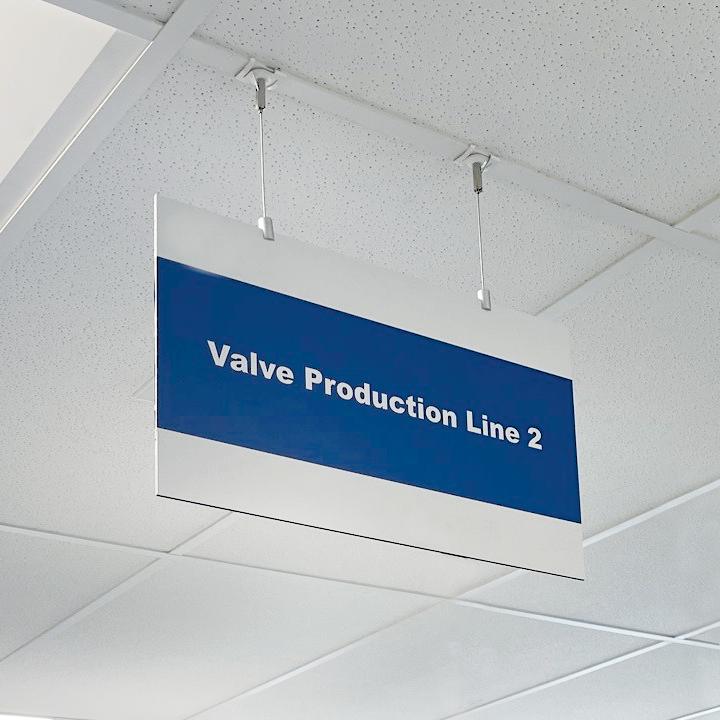
Many retailers look for ceiling display systems that allow signs to be installed or adjusted from floor level whenever the ceiling type and installation conditions make that possible.
Ceiling Outfitters specializes in ceiling display solutions that help businesses reduce dependence on ladders by using floor-operated installation methods and reusable hanging systems. Instead of treating every sign change as a separate project, retailers can build a process that supports recurring updates throughout the year.
For stores with frequent promotional changes, this type of approach reduces setup time while creating a more consistent installation process.
Think Beyond Individual Signs
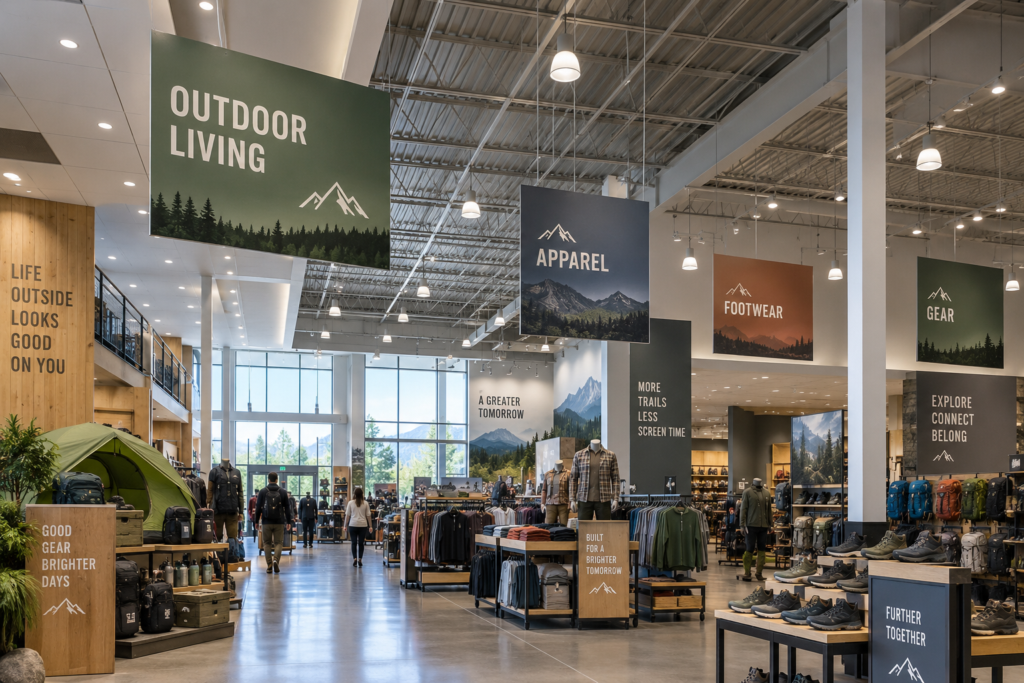
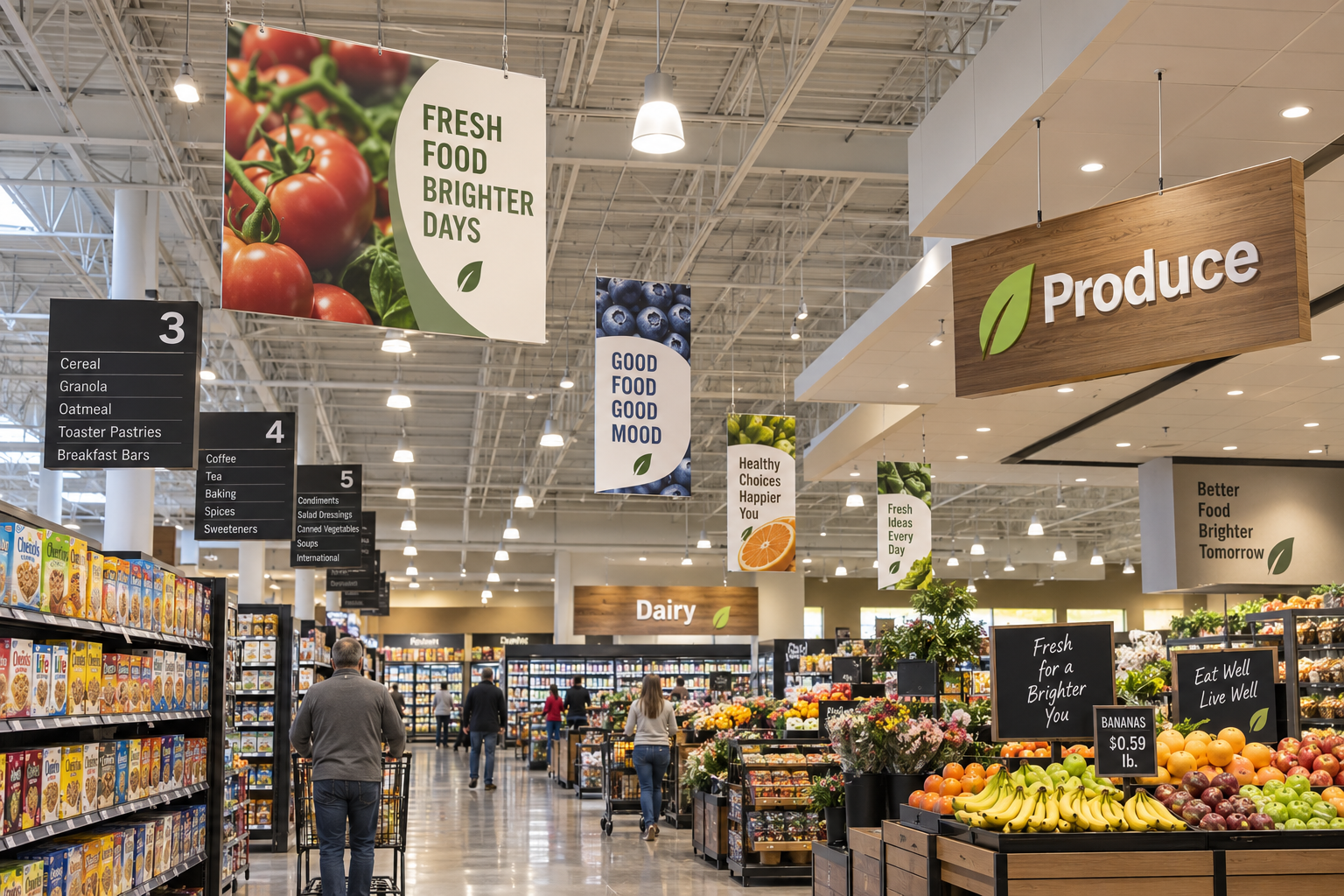
Each overhead sign is part of a larger visual merchandising strategy. Customers rely on overhead displays to locate departments, identify promotions, and navigate the store more efficiently.
When signs hang at inconsistent heights or require excessive time to replace, the entire update process becomes harder to manage.
Standardized installation methods maintain a consistent appearance across departments. They also reduce the adjustments required during future promotions because signs begin from the same baseline each time.
That consistency becomes especially valuable for retailers managing multiple locations, where customers expect the same experience from store to store.
How Magnetic Ceiling Display Systems Improve Efficiency
Retail teams benefit from using a process that removes unnecessary steps from every sign change. One way to accomplish that is by using a magnetic ceiling display system designed for recurring updates.
Instead of rebuilding each installation, magnetic systems let employees remove one sign and replace it with another while keeping the hanging point in place. That reduces setup time and helps maintain consistent sign placement throughout the store.
The Clik-Clik® Magnetic System follows this approach. Rather than treating every promotion as a new installation, retailers can establish a repeatable process that supports ongoing merchandising changes. For stores with frequent promotional updates, that consistency simplifies future resets and reduces disruption.
Choose Components That Support Future Changeouts
Every retail environment is different. Ceiling height, ceiling type, sign size, and display location all influence which hanging components work best.
Selecting reusable components from the beginning makes future updates easier because employees continue using the same system instead of replacing hardware during every campaign.
For example, adjustable hanging products such as UrbanTrapeze® create consistent sign heights while allowing displays to be repositioned when layouts change. Reusable hanging lines and compatible accessories also simplify routine maintenance and replacement.
The objective isn’t to buy more hardware. It’s to create a system that supports years of promotional updates with minimal disruption.
Standardize the Process Across Every Store
Consistency becomes even more valuable when multiple stores follow the same promotional calendar.
If each location uses different hardware or installation methods, store resets become harder to coordinate. Training also takes longer because employees must learn multiple processes instead of one.
A standardized ceiling display system gives every location the same starting point. Store managers can assign changeouts with greater confidence because employees already understand the process.
This approach also maintains a consistent customer experience. Department signs, promotional displays, and wayfinding graphics appear uniform regardless of which location customers visit.
Common Mistakes That Slow Future Sign Changes
Many retailers focus on completing today’s installation without considering the next update. That decision creates unnecessary work every time overhead signs need to be replaced.
Avoid these common mistakes:
Using Different Hanging Methods Throughout the Store
Mixing hardware and installation techniques creates confusion during future resets. Standardizing one approach saves time and reduces errors.
Replacing Hardware With Every Promotion
Reusable hanging systems eliminate the need to start over with each campaign.When appropriate, hardware can remain in place so employees only need to replace the sign. When hardware needs to be removed, it can be retained, stored in a designated location, and reused for the next promotion. This reduces unnecessary material replacement, helps control costs, and simplifies future sign changes.
Skipping Planning Before a Store Reset
Preparing signs and hanging hardware before the changeout begins helps employees complete updates with fewer interruptions.
Overlooking Employee Training
A simple, repeatable process shortens the learning curve. Employees can perform sign changes more confidently when every department follows the same method.
Where to Start
Improving overhead sign changes doesn’t require replacing every display at once.
Many retailers begin by standardizing one department, one promotional area, or one store. Once the process is established, it becomes easier to expand the same system across additional locations.
If you’re evaluating ceiling display solutions, consider how they’ll support your next five promotional updates, not just your next installation. A reusable system delivers the greatest value when it simplifies every future changeout.
For businesses ready to establish a repeatable process, Clik-Clik™ Starter Kits provide the core components needed to begin using a reusable ceiling display system. Starting with a kit makes it easier to implement a consistent approach and expand the system as your signage program grows.
Make Every Sign Change Easier
Retail signage will continue to change as promotions, departments, and seasonal campaigns evolve. The question isn’t whether your team will replace overhead signs again. It’s how much time and effort each update will require.
A standardized ceiling display system removes unnecessary steps from the process. When employees spend less time setting up equipment, searching for hardware, or adjusting displays, they can complete changeouts more efficiently and return their attention to serving customers.
Ceiling Outfitters helps retailers build that repeatable process with reusable ceiling display solutions designed for recurring updates. Whether you’re refreshing one department or coordinating a chain-wide campaign, the right system supports faster, more consistent overhead signage changes.
Explore Ceiling Display Solutions or browse Clik-Clik™ Starter Kits to find a solution that fits your retail environment.
Frequently Asked Questions
What are the best practices for in-store signage?
Effective retail store signage should communicate one clear message, remain easy to read from a distance, and be placed where customers naturally look for information. Overhead signs should also be installed consistently so they can be updated without disrupting store operations. Using reusable hanging systems makes recurring promotional changes more efficient.
What are common signage mistakes?
Common mistakes include using too much text, placing signs where shoppers can’t see them, hanging displays at inconsistent heights, and relying on hardware that makes future updates more difficult. Planning for recurring sign changes reduces these issues over time.
How do you make signage stand out?
Keep messaging concise, use high-contrast colors, choose readable fonts, and position signs where customers make shopping decisions. Overhead displays should remain level and consistent throughout the store so they reinforce navigation instead of creating visual clutter.
What is the markup on signage?
Markup varies depending on materials, production methods, installation requirements, and other project costs. For retailers, the total cost of ownership extends beyond the printed sign. Labor, installation time, reusable hardware, and the efficiency of future changeouts also affect the overall value of a signage program.